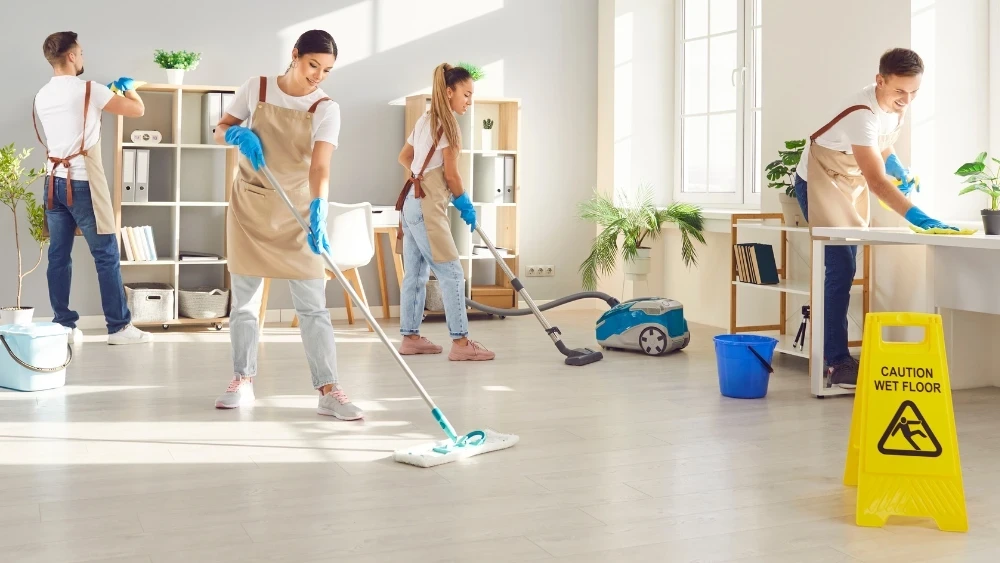
Commercial Cleaning Services or In-House Cleaner? Pros & Cons for Your Business
There are two primary office cleaning options to consider. The first is hiring an in-house cleaner. Someone employed directly by your company to manage cleaning tasks. They typically work set hours, use your materials, and may take on additional duties like refilling supplies or supporting reception.
The second is contracting commercial cleaning services. These are external professionals who handle cleaning through a service agreement. They provide their equipment, materials, and trained staff. You get a schedule that suits your hours, often with evening or early morning visits that avoid disrupting your team.
Comparing Costs. It’s More Than Hourly Rates
Hiring someone in-house can appear cheaper upfront. You pay an hourly wage, and you’re in control. But what many don’t account for is the ongoing cost of recruitment, training, holiday and sickness cover, pensions, uniforms, and cleaning supplies.
With commercial cleaning services, those extras are built into the contract. You pay a flat fee, and the provider takes care of equipment, chemicals, labour management, and insurance. That consistency makes budgeting easier, especially if your cleaning needs fluctuate.
Don’t Forget Hidden Expenses
Replacing hoovers, ordering cloths, or covering last-minute absences adds up fast. Outsourced teams bring fully stocked kits, trained replacements, and consistent coverage without added admin.
Why Flexibility Matters More Than You Think
In-house cleaners are usually limited to specific hours and duties. If a deep clean is suddenly needed or they’re off sick, scrambling is your only option. For small teams, one absence can mean bins go unemptied and loose and aren’t cleaned.
With commercial cleaning services, flexibility is part of the deal. Contracts can be scaled based on need. You can add more hours, request special cleans, or pause service during quiet periods.
Special Events or Busy Seasons? No Problem
If your business hosts client events, staff parties, or end-of-year wrap-ups, extra cleaning isn’t something in-house staff can always handle. A service provider can help even on short notice.
Who Ensures Consistency and Accountability?
One of the trickiest parts of having an in-house cleaner is monitoring quality. If they’re not performing or cutting corners, you have to manage that. Providing feedback to a colleague isn’t always easy, especially in small offices.
Commercial cleaning services, on the other hand, typically assign supervisors, conduct regular quality checks, and often provide reporting systems for any issues that may arise. If something’s wrong, you raise it once and it’s handled, often without speaking to the cleaner directly.
Professional Standards Are Easier to Enforce From Outside
Having a team that’s not part of your everyday staff allows you to treat the cleaning service like any supplier. Expectations can be outlined clearly, and standards can be followed without becoming personal.
Which Option Works Best for Your Office?
Choosing between in-house and outsourced cleaners depends on your space, budget, and internal structure. A small team, working from one or two rooms, might be fine with a dedicated staff cleaner. That setup makes sense if you want someone present all day for light cleaning.
But if your office spans multiple rooms, has kitchenettes, break areas, high-traffic zones, or shared spaces, commercial cleaning services will likely give you better value, reliability, and results. They’re also the smarter choice when your team wants to avoid managing another employee role altogether.
Some businesses opt for a hybrid model, using in-house staff for basic upkeep and outsourcing monthly deep cleans or post-event refreshes. This offers flexibility while still maintaining control over daily tasks.